End Product
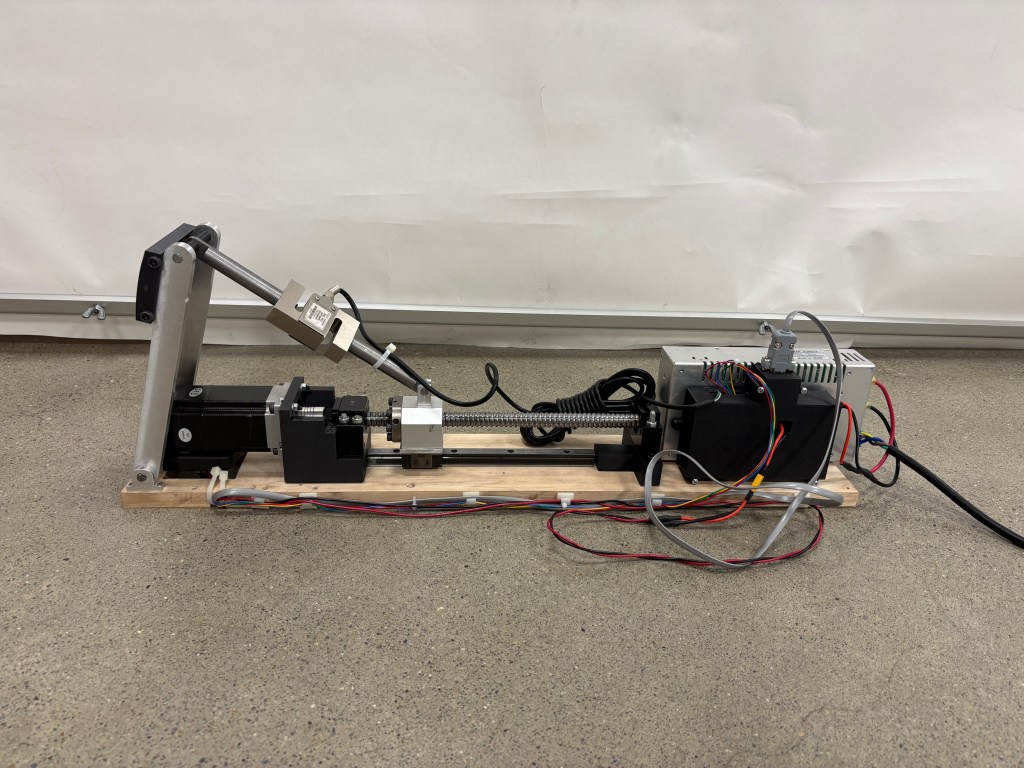
In my senior design capstone class, I, along with 3 other engineers, decided to design and fabricate a Force Feedback Brake Pedal for integration into a racing simulator game.
Why?
Existing force feedback pedals ($2000+) are very expensive and are growing in popularity, as they offer users adjustable pedal stiffness, travel distance, and ABS and traction control feedback. The group aimed to design a pedal with similar functions within a budget of $250.
My Role
I led the CAD assembly as well as the manufacturing approach and timeline. All components were manufactured using a variety of machines at CWRU’s makerspace, think[box].
I developed a manufacturing schedule in order to keep the team on pace to meet the deadline.
The Design
The FFB Pedal uses a load cell to read the user inputted force on the pedal. The ESP32 microcontroller then reads the force, and applies the necessary power to the stepper motor according to the specified stiffness setting. The rotation of the ball screw is transformed into the linear motion of the sled. To decrease wear on the ball screw, a single linear rail is used to support any loads perpendicular to the ball screw.
Electronics & Control
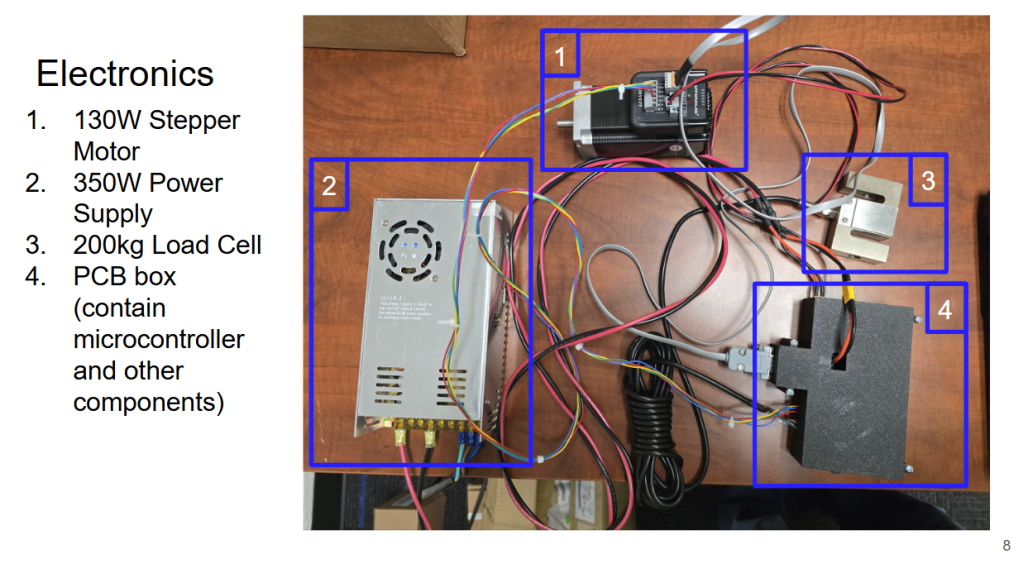
The project utilized open source software that was slightly modified to fit the components the electronic components that the team chose.
Mechanical Design
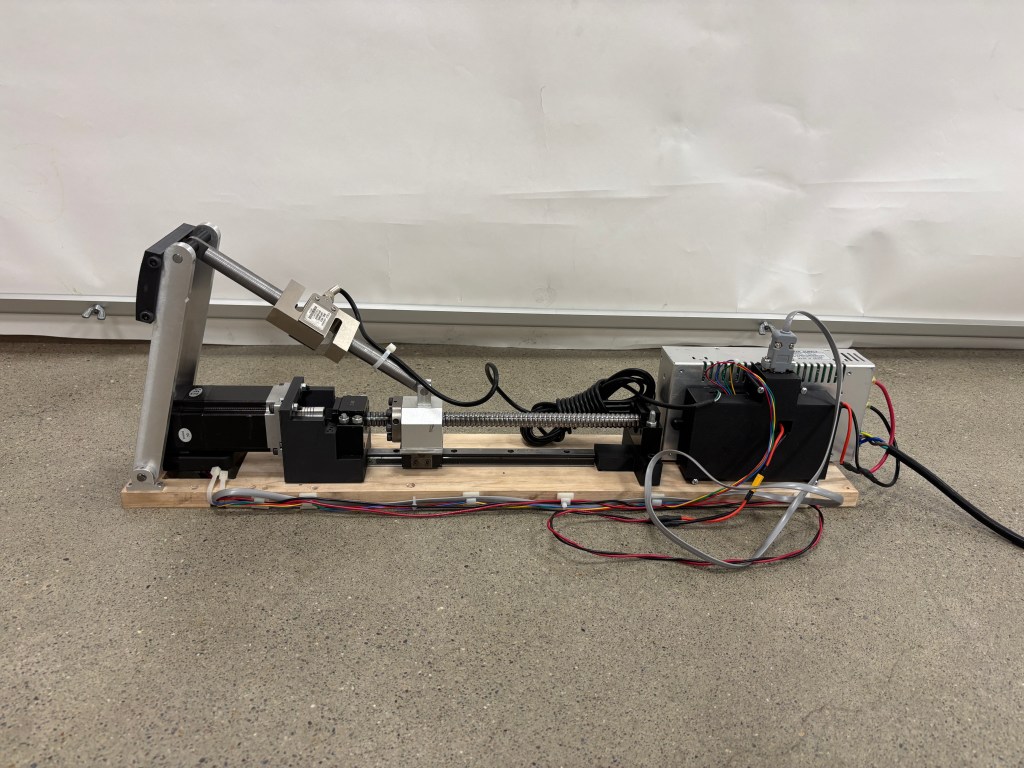
I led fabrication for all manufactured parts. A waterjet cutter was heavily utilized for roughing, then manual mills and lathes were used for finishing features. The pedal arm and load cell connections are the highest stressed parts- aluminum was chosen due to ease of machining and availability. Design weight and form factor could be reduced in the future by utilizing FEA and more detailed stress analysis.
Theory of Ops
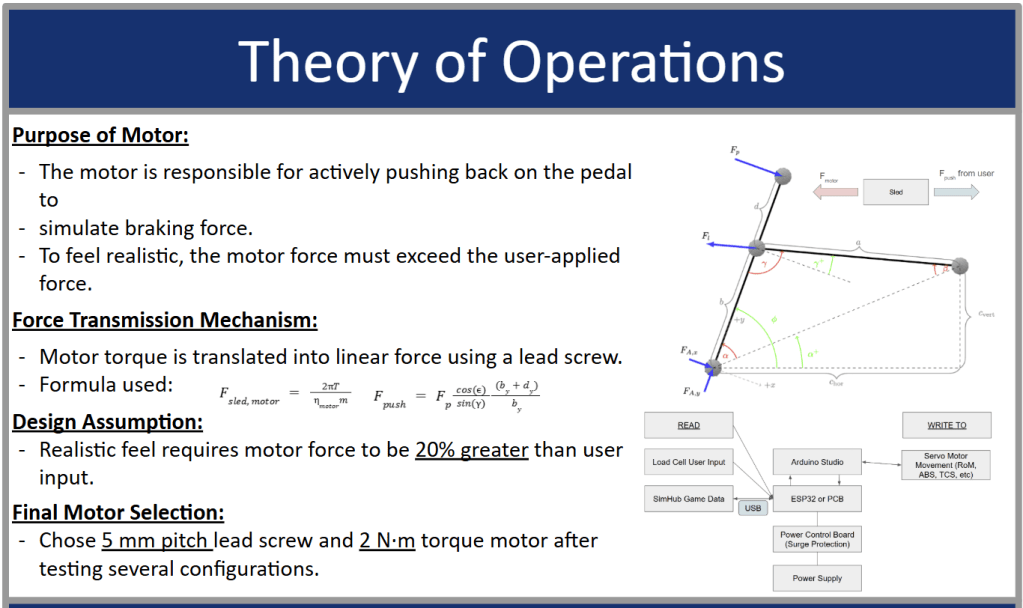
At the start of the design process, preliminary trade studies were conducted to compute loads on linkages and to size the motor and lead screw pitch.
A simple pedal kinematic model was constructed in order to calculate the necessary loads needed. To simulate professional racing brake pressures, a max load of ~150 kg was taken to be applied to the pedal pad.
 Ethan Cogdill Engineering Portfolio